Educational Recovery in the Aftermath of the Pandemic: A Critical Analysis of Recovery Policies across Canada
DOI:
https://doi.org/10.53967/cje-rce.6467Keywords:
pandemic, educational policies, academic resilience, recoveryAbstract
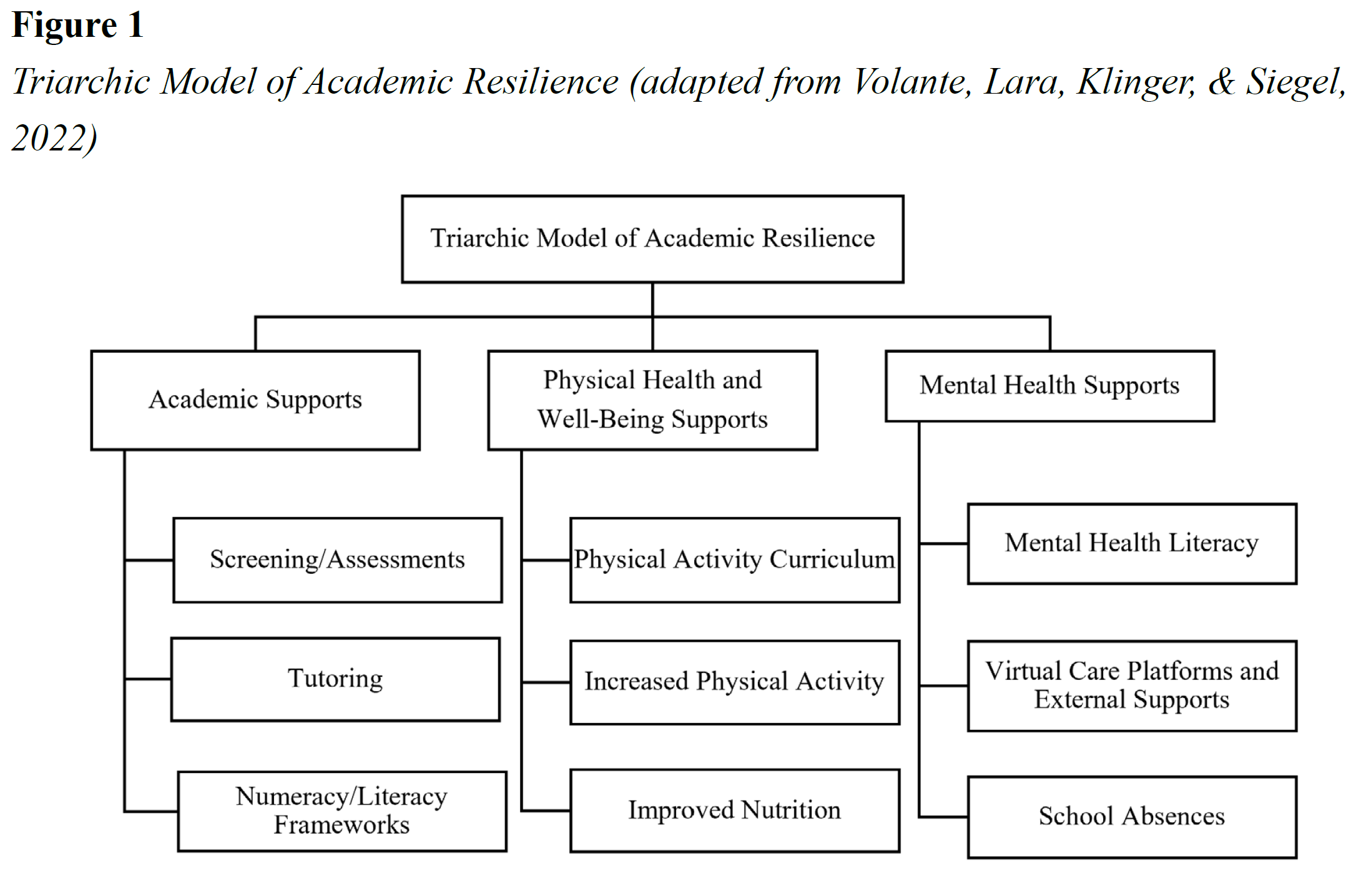
This study expands on our previous research focusing on provincial educational policies to support students’ academic resilience during the pandemic, with the current focus being on the “recovery phase” of the pandemic (January 2022 to December 2023). Our analysis identified 46 provincial documents that addressed one or more of the three dimensions of academic resilience during this recovery period. Similar to our previous findings, a greater emphasis was placed on academic outcomes. There was an increased focus on mental health, while much less attention was paid to physical health and well-being. While we identified examples of provinces that dedicated resources and funding to support these dimensions, we argue the policies implemented during the recovery phase will require more conviction to address the negative long-term impacts of the pandemic, particularly for disadvantaged students, and that such efforts will likely need to continue beyond public schooling.
Metrics
References
Alasino, E., Ramírez, M. J., Romero, M., Schady, N., & Uribe, D. (2024). Learning losses during the COVID-19 pandemic: Evidence from Mexico. Economics of Education Review, 98. https://doi.org/10.1016/j.econedurev.2023.102492
Alberta Children’s Services. (2022). Alberta child and youth well-being action plan. https://open.alberta.ca/dataset/c879b3d0-66c2-49e5-bef4-2ee2348833f5/resource/8451bbc3-97e2-468b-97b7-c9ce6c0bea69/download/cs-alberta-child-and-youth-well-being-action-plan.pdf
Alberta Education. (2020). 2020-21 school re-entry plan. Government of Alberta. https://open.alberta.ca/dataset/a3910dd5-d52f-4a7d-821f-a381002419e9/resource/03c07743-31bc-46d1-9c65-b39335c4f3ad/download/edu-2020-2021-school-re-entry-plan-2020-0827.pdf
Alberta Education. (2022a). Implementing a continuum of supports and services: A resource guide for school and school authority leaders. Government of Alberta. https://open.alberta.ca/dataset/17f94fa5-05ae-4bfa-af99-6deac0775087/resource/d8c9a97e-835d-4b79-9a51-9f4b8cd0b550/download/edc-implementing-continuum-supports-services-resource-guide-school.pdf
Alberta Education. (2022b). K to 6 curriculum renewal. Government of Alberta. https://www.alberta.ca/curriculum-key-themes
Alberta Education. (2022c). New K-6 curriculum: Literacy. Government of Alberta. https://open.alberta.ca/dataset/da982352-b50d-49a2-8805-c9073a7ecebd/resource/9dacc515-68a4-4b4e-8d5a-92b3cd3a6e38/download/edc-new-curr-k6-themes-literacy.pdf
Alberta Education. (2022d). New K-6 curriculum: Numeracy. Government of Alberta. https://open.alberta.ca/dataset/da982352-b50d-49a2-8805-c9073a7ecebd/resource/15fc3c3e-9d86-494e-9ac3-412a3f7ed931/download/edc-new-curr-k6-themes-numeracy.pdf
Alberta Education. (2022e). New K-6 curriculum: Practical skills. Government of Alberta. https://open.alberta.ca/dataset/da982352-b50d-49a2-8805-c9073a7ecebd/resource/0211b40d-28d0-402d-b36d-ae82df43a5af/download/edc-new-curr-k6-themes-practical-skills.pdf
Alberta Education. (2022f). New K-6 curriculum: Physical education and wellness. Government of Alberta. https://open.alberta.ca/dataset/da982352-b50d-49a2-8805-c9073a7ecebd/resource/353aabb3-8e2e-42a7-831b-3402c8db42db/download/edc-new-curr-k6-phys-ed-wellness.pdf
Alberta Education. (2022g). 2021–2022 school year plan. Government of Alberta. https://open.alberta.ca/dataset/13d2242a-d310-419e-960c-6fe273d0f7b3/resource/e73afc7d-2d10-4e9a-af85-084e2d31b2a5/download/edc-2021-2022-school-year-plan-2022-02.pdf
Alberta Education. (2023a). Alberta Education approved literacy and numeracy assessments. Government of Alberta. https://www.alberta.ca/system/files/custom_downloaded_images/edc-approved-literacy-and-numeracy-assessments-grades-1-3.pdf
Alberta Education. (2023b). General information bulletin 2023–2024: literacy and numeracy screening assessments. Government of Alberta. https://www.alberta.ca/system/files/educ-general-information-bulletin-literacy-and-numeracy-screening-assessments.pdf
Alberta Education. (2023c). Literacy and numeracy screening assessments. Government of Alberta. https://curriculum.learnalberta.ca/cdn/public-docs/Literacy%20and%20Numeracy%20Screening%20Assessments.pdf
Bailey, D. H., Duncan, G. J., Murnane, R. J., & Yeung, N. A. (2021). Achievement gaps in the wake of COVID-19. Educational Researcher, 50(5), 266–275. https://doi.org/10.3102%2F0013189X211011237
Barnum, M. (2023, June 27). The teaching profession is facing a post-pandemic crisis. Chalkbeat. https://www.chalkbeat.org/2023/6/27/23774375/teachers-turnover-attrition-quitting-morale-burnout-pandemic-crisis-covid/
Bartholo, T. L., Koslinski, M. C., Tymms, P., & Castro, D. L. (2023). Learning loss and learning inequality during the Covid-19 pandemic. Ensaio: Avaliação e Políticas Públicas em Educação, 31(19), 1–24. https://www.doi.org/10.1590/S0104-40362022003003776
Bennett, P. W. (2023). Pandemic fallout: Learning loss, collateral damage, and recovery in Canada’s schools. Cardus Foundation. https://www.cardus.ca/research/education/reports/pandemic-fallout/
Betthäuser, B. A., Bach-Mortensen, A. M., & Engzell P. (2023). A systematic review and meta-analysis of the evidence on learning during the COVID-19 pandemic. Nature Human Behaviour, 7(3), 375–385. https://www.doi.org/10.1038/s41562-022-01506-4
Boak, A., Elton-Marshall, T., & Hamilton, H. A. (2022). The well-being of Ontario students: Findings from the 2021 Ontario student drug use and health survey. Centre for Addiction & Mental Health. https://youthrex.com/wp-content/uploads/2022/04/2021-OSDUHS-Report-pdf.pdf
Blaskó, Z., da Costa, P., & Schnepf, S. V. (2021). Learning loss and educational inequalities in Europe: Mapping the potential consequences of the COVID-19 crisis [Discussion paper No. 14298]. IZA Institute of Labor Economics. https://ftp.iza.org/dp14298.pdf
British Columbia Ministry of Education and Child Care. (2021). K-12 education recovery plan. Government of British Columbia. https://files.eric.ed.gov/fulltext/ED613802.pdf
British Columbia Ministry of Education and Child Care. (2023). BC learning pathways: A guide for teachers. Government of British Columbia. https://curriculum.gov.bc.ca/sites/curriculum.gov.bc.ca/files/pdf/learning-pathways/a-guide-for-teachers.pdf
Canovan, C., & Fallon, N. (2021). Widening the divide: The impact of school closures on primary science learning. SN Social Sciences, 1(117). https://doi.org/10.1007/s43545-021-00122-9
Cénat, J. M., & Dalexis, R. D. (2020). The complex trauma spectrum during the COVID-19 pandemic: A threat for children and adolescents’ physical and mental health. Psychiatry Research, 293. https://doi.org/10.1016/j.psychres.2020.113473
Colley, R. C., Clarke, J., Doyon, C. Y., Janssen, I., Lang, J. J., Timmons, B. W., Tremblay, M. S. (2019). Trends in physical fitness among Canadian children and youth. Health Reports, 30(10), 3–13. https://www.doi.org/10.25318/82-003-x201901000001-eng
Creswell, J., & Poth, C. (2017). Qualitative inquiry and research design: Choosing among five approaches (4th ed.). SAGE.
CSA Group. (2020). Mental health and well-being for students. https://www.csagroup.org/store/product/CSA%20Z2003%3A20/
Depping, D., Lücken, M., Musekamp, F., & Thonke, F. (2021). KompetenzständeHamburger Schülerinnen vor und während der Corona-Pandemie [Alternative pupils’ competence measurement in Hamburg during the Corona pandemic]. DDS – Die Deutsche Schule, Beiheft, 17, 51–79. https://www.pedocs.de/volltexte/2021/21514/pdf/DDS_Beiheft_17_2021_Depping_et_al_Kompetenzstaende_Hamburger.pdf
De Witte, K., & François, M. (2023). Covid-19 learning deficits in Europe: Analysis and practical recommendations. European Expert Network on Economics of Education. https://eenee.eu/wp-content/uploads/2023/03/Policy-brief_AR04_EAC.pdf
Di Pietro, G., Biagi, F., Dinis Mota Da Costa, P., Karpinski, Z., & Mazza, J. (2020). The likely impact of COVID-19 on education: Reflections based on the existing literature and recent international datasets. https://publications.jrc.ec.europa.eu/repository/handle/JRC121071
Dorn, E., Hancock, B., Sarakatsannis, J., & Viruleg, E. (2020, June 1). COVID-19 and student learning in the United States: The hurt could last a lifetime. McKinsey & Company. https://www.mckinsey.com/industries/education/our-insights/covid-19-and-student-learning-in-the-united-states-the-hurt-could-last-a-lifetime
Duncan, M. J., Riazi, N. A., Belita, E., Amores, A., Vanderloo, L. M., Carsley, S., Laxer, R. E., Carson, V., Faulkner, G., Chaput, J., Leatherdale, S. T., & Patte, K. A. (2023). Physical activity and recreational screen time change among adolescents in Canada: Examining the impact of COVID-19 in worsening inequity. Preventative Medicine, 175. https://www.sciencedirect.com/science/article/pii/S0091743523002566
Elez, V., Imbeau, E., Tao, Y., Paquet, V., Kotasinka, A., Rostamian, A., Subtil-Smith, L., Cardoso, M., Scerbina, T., & Khan, G. (2023). Measuring up: Canadian results of the OECD PISA 2022 study: The performance of Canadian 15-year-olds in mathematics, reading, and science. Council of Ministers of Education, Canada. https://cmec.ca/Publications/Lists/Publications/Attachments/438/PISA-2022_Canadian_Report_EN.pdf
Engzell, P., Frey, A., & Verhagen, M. D. (2021). Learning loss due to school closures during the COVID-19 pandemic. Proceedings of the National Academy of Sciences of the United States of America, 118(17), 1–7. https://www.pnas.org/content/pnas/118/17/e2022376118.full.pdf
Fahle, E., Kane, T. J., Reardon, S. F., & Staiger, D. O. (2024). Education recovery scorecard: The first year of pandemic recovery: A district level analysis. Harvard University Center for Education Policy Research and The Educational Opportunity Project at Stanford University. https://educationrecoveryscorecard.org/wp-content/uploads/2024/01/ERS-Report-Final-1.31.pdf
Finnish Government. (2023, December 5). Minister of Education Henriksson: Improving students’ basic skills by introducing more lessons and restructuring support measures [Press release]. Finnish Ministry of Education and Culture. https://valtioneuvosto.fi/en/-//1410845/minister-of-education-henriksson-improving-students-basic-skills-by-introducing-more-lessons-and-restructuring-support-measures
Farrington, C. A., Roderick, M., Allensworth, E., Nagaoka, J., Keyes, T. S., Johnson, D. W., & Beechum, N. O. (2012). Teaching adolescents to become learners: The role of noncognitive factors in shaping school performance. University of Chicago Consortium on School Research.
Freeman, J. G., King, M. A., & Pickett, W. (2011). The health of Canada’s young people: A mental health focus. Public Health Agency of Canada. https://www.phac-aspc.gc.ca/hp-ps/dca-dea/publications/hbsc-mental-mentale/assets/pdf/hbsc-mental-mentale-eng.pdf
Government Offices of Sweden. (2024, February 8). Government investing in more reading time and less screen time. Swedish Ministry of Education and Research. https://www.government.se/articles/2024/02/government-investing-in-more-reading-time-and-less-screen-time/
Government of Newfoundland and Labrador. (2023). Provincial school food guidelines. https://www.gov.nl.ca/hcs/files/Provincial-School-Food-Guidelines-Jan-2022.pdf
Guariso, A., & Björkman Nyqvist, M. (2023). The impact of the COVID-19 pandemic on children’s learning and wellbeing: Evidence from India. Journal of Development Economics, 164. https://pubmed.ncbi.nlm.nih.gov/37342545/
Giancola, O., & Salmieri, L. (2024). The pandemic, socioeconomic disadvantage and learning outcomes in Italy. In S. V. Schnepf, L. Volante, D. A. Klinger, O. Giancola, & L. Salmieri (Eds.), The pandemic, socioeconomic disadvantage, and learning outcomes: Cross-national impact analyses of education policy reforms (pp. 94–118). Joint Research Centre (European Commission).
Guerrero, M. D., Vanderloo, L. M., Rhodes, R. E., Faulkner, G., Moore, S. A., & Tremblay, M. S. (2020). Canadian children’s and youth’s adherence to the 24-h movement guidelines during the COVID-19 pandemic: A decision tree analysis. Journal of Sport and Health Science, 9(4), 313–321. https://doi.org/10.1016/j.jshs.2020.06.005
Hart, A., Gagnon, E., Eryigit-Madzwamuse, S., Cameron, J., Aranda, K., Rathbone, A., & Heaver, B. (2016). Uniting resilience research and practice with an inequalities approach. Sage Open, 6(4). https://doi.org/10.1177/2158244016682477
Kerai, S., Almas, A., Guhn, M., Forer, B., & Oberle, E. (2022). Screen time and developmental health: Results from an early childhood study in Canada. BMC Public Health, 22. https://doi.org/10.1186/s12889-022-12701-3
Khan, M. J., & Ahmed, J. (2021). Child education in the time of pandemic: Learning loss and dropout. Children and Youth Services Review, 127. https://doi.org/10.1016/j.childyouth.2021.106065
Kovacs, V. A., Starc, G., Brandes, M., Kaj, M., Blagus, R., Leskošek, B., Suesse, T., Dinya, E., Guinhouya, B. C., Zito, V., Rocha, P. M., Gonzalez, B. P., Kontsevaya, A., Brzezinski, M., Bidiugan, R., Kiraly, A., Csányi, T., & Okely, A. D. (2022). Physical activity, screen time and the COVID-19 school closures in Europe – An observational study in 10 countries. European Journal of Sport Science, 22(7), 1094–1103. https://doi.org/10.1080/17461391.2021.1897166
Lewis, K., & Kuhfeld, M. (2023). Education’s long COVID: 2022–23 achievement data reveal stalled progress toward pandemic recovery. Center for School and Student Progress. https://files.eric.ed.gov/fulltext/ED630208.pdf
Maldonado, J. E., & De Witte, C. (2021). The effect of school closures on standardised student test outcomes. British Educational Research Journal, 48(1), 49–94. https://doi.org/10.1002/berj.3754
Manitoba Education. (2022). Manitoba’s K to 12 education action plan. Government of Manitoba. https://www.edu.gov.mb.ca/k12/action_plan/docs/actionplan_eng.pdf
Manitoba Education. (2023a). Early years assessment consultation summary what we heard. Government of Manitoba. https://www.gov.mb.ca/healthychild/publications/whatweheard.pdf
Manitoba Education. (2023b). Framework for learning. Government of Manitoba. https://www.edu.gov.mb.ca/k12/cur/framework/docs/frameworkforlearning_eng.pdf
Manitoba Education. (2023c). Implement approach to identifying learning needs, interventions. Government of Manitoba. https://www.edu.gov.mb.ca/k12/action_plan/highquality/learning_needs.html
Manitoba Education. (2023d). Pilot for the grade 10 provincial evaluation of mathematics, reading and responding. Government of Manitoba. https://www.edu.gov.mb.ca/k12/assess/gr10/docs/g10_eval_fact_sheet.pdf
Manitoba Education. (2023e). Safe and caring schools: A policy directive and action plan to enhance student presence and engagement. Government of Manitoba. https://www.edu.gov.mb.ca/k12/docs/support/presence_engagement/student_presence_engagement.pdf
Martin, A. J., & Marsh, H. W. (2006). Academic resilience and its psychological and educational correlates: A construct validity approach. Psychology in the Schools, 43(3), 267–282. https://doi.org/10.1002/pits.20149
McCormack, G. R., Doyle-Baker, P. K., Petersen, J. A., & Ghoneim, D. (2020). Parent anxiety and perceptions of their child’s physical activity and sedentary behaviour during the COVID-19 pandemic in Canada. Preventive Medicine Reports, 20. https://doi.org/10.1016/j.pmedr.2020.101275
Meherali, S., Punjani, N., Louie-Poon, S., Abdul Rahim, K., Das, J. K., Salam, R. A., & Lassi, Z. S. (2021). Mental health of children and adolescents amidst COVID-19 and past pandemics: A rapid systematic review. International Journal of Environmental Research and Public Health, 18(7). https://doi.org/10.3390/ijerph18073432
Merchant, S., Klinger, D. A., & Love, A. (2018). Assessing and reporting non-cognitive skills: A cross-Canada survey. Canadian Journal of Educational Administration and Policy, 187. https://journalhosting.ucalgary.ca/index.php/cjeap/article/view/43135
Michaud, P., Michaud, L., Mazur, A., Hadjipanayis, A., Kapp, C., & Ambresin, A. (2022). The impact of COVID on adolescent mental health, self-harm and suicide: How can primary care provider respond? A position paper of the European Academy of Pediatrics. Frontiers in Pediatrics, 10. https://www.frontiersin.org/articles/10.3389/fped.2022.800000/full
Molato-Gayares, R., Suryadarma, D., Park, A., Thomas, M., Raitzer, D. A., & Vandenberg, P. (2022). How to recover learning losses from COVID-19 school closures in Asia and the Pacific. Asian Development Bank. http://dx.doi.org/10.22617/BRF220301-2
Moscoviz, L., & Evans, D. K. (2022). Learning loss and student dropouts during the COVID-19 pandemic: A review of the evidence two years after schools shut down [Working paper 609]. Center for Global Development. https://www.ungei.org/sites/default/files/2022-04/learning-loss-and-student-dropouts-during-covid-19-pandemic-review-evidence-two-years.pdf
Neville, R. D., Lakes, K. D., Hopkins, W. G., Tarantino, G., Draper, C. E., Beck, R., & Madigan, S. (2022). Global changes in child and adolescent physical activity during the COVID-19 pandemic: a systematic review and meta-analysis. JAMA Pediatrics, 176(9), 886–894. https://jamanetwork.com/journals/jamapediatrics/fullarticle/2794075
New Brunswick Department of Education and Early Childhood Development. (2023). Assessment and evaluation (anglophone sector). Government of New Brunswick. https://www2.gnb.ca/content/gnb/en/departments/education/k12/content/anglophone_sector/assessment_evaluation.html
Nova Scotia Department of Education and Early Childhood Development. (2022a). Six pillars of effective reading instruction. Nova Scotia Curriculum. https://curriculum.novascotia.ca/sites/default/files/documents/resource-files/Six%20Pillars%20of%20Effective%20Reading%20Instruction.pdf
Nova Scotia Department of Education and Early Childhood Development. (2022b). Student assessment policy. Government of Nova Scotia. https://www.ednet.ns.ca/docs/studentassessmentpolicyen.pdf
Nova Scotia Department of Education and Early Childhood Development. (2023a). Instructional guidelines to support the six pillars of effective reading instruction. Nova Scotia Curriculum.
Nova Scotia Department of Education and Early Childhood Development. (2023b). Physical activity framework for Nova Scotia schools. Nova Scotia Curriculum. https://curriculum.novascotia.ca/sites/default/files/documents/resource-files/Physical%20Activity%20Framework%20ENG%20(2023).pdf
Ontario Ministry of Education. (2020). Policy/program memorandum 164. Government of Ontario. https://www.ontario.ca/document/education-ontario-policy-and-program-direction/policyprogram-memorandum-164
Ontario Ministry of Education. (2022a). Memorandum 2022 B02: Learning recovery action plan. Government of Ontario. https://efis.fma.csc.gov.on.ca/faab/Memos/B2022/B02_EN.pdf
Ontario Ministry of Education. (2022b). Memorandum 2022 B03: 2022-23 grants for student needs funding (GSN). Government of Ontario. https://efis.fma.csc.gov.on.ca/faab/Memos/B2022/B03_EN.pdf
Ontario Ministry of Education. (2022c). Memorandum 2022 SB11: 2022-23 student mental well-being allocation. Government of Ontario. https://efis.fma.csc.gov.on.ca/faab/Memos/SB2022/SB11_EN.pdf
Ontario Ministry of Education. (2022d). Ontario’s learning recovery action plan for students. Government of Ontario. https://news.ontario.ca/en/backgrounder/1001622/ontarios-learning-recovery-action-plan-for-students
Ontario Ministry of Education. (2022e). Preparing students for the future: Supporting learning recovery. Government of Ontario. https://www.ontario.ca/page/preparing-students-future
Ontario Ministry of Education. (2023a). Policy/program memorandum 151: Professional activity days devoted to provincial education priorities. Government of Ontario. https://www.ontario.ca/document/education-ontario-policy-and-program-direction/policyprogram-memorandum-151#:~:text=The%20regulation%20states%20that%20school,PA%20days%20per%20school%20year.
Ontario Ministry of Education. (2023b). Policy/program memorandum 168: Reading instruction and early reading screening. Government of Ontario. https://www.ontario.ca/document/education-ontario-policy-and-program-direction/policyprogram-memorandum-168
Ontario Ministry of Education. (2023c). Policy/program memorandum 169: Student mental health. Government of Ontario. https://www.ontario.ca/document/education-ontario-policy-and-program-direction/policyprogram-memorandum-169#:~:text=Every%20school%20board%20must%20develop,will%20be%20evaluated%20and%20measured
Organisation for Economic Co-operation and Development. (2011). Against the odds: Disadvantaged students who succeed in school. OECD Publishing.
Organisation for Economic Co-operation and Development. (2019). PISA 2018 results (Volume II): Where all students can succeed. OECD Publishing. https://doi.org/10.1787/b5fd1b8f-en
Organisation for Economic Co-operation and Development. (2020). The impact of COVID-19 on student equity and inclusion: Supporting vulnerable students during school closures and school re-openings. OECD Publishing. https://oecd.org/education/strength-through-diversity/OECD%20COVID-19%20Brief%20Vulnerable%20Students.pdf
Organisation for Economic Co-operation and Development. (2021). The state of school education: One year into the COVID pandemic. OECD Publishing. https://doi.org/10.1787/201dde84-en
Organisation for Economic Co-operation and Development. (2023a). PISA 2022 results (Volume 1): The state of learning and equity in education. OECD Publishing. https://www.oecd-ilibrary.org/education/pisa-2022-results-volume-i_53f23881-en
Organisation for Economic Co-operation and Development. (2023b). PISA 2022 results (Volume II): Learning during – and from – disruption. OECD Publishing. https://doi.org/10.1787/a97db61c-en
Ostermeier, E., Tucker, P., Clark, A., Seabrook, J. A., & Gilliland, J. (2021). Parents’ report of Canadian elementary school children’s physical activity and screen time during the COVID-19 pandemic: A longitudinal study. International Journal of Environmental Research and Public Health, 18(23). https://www.mdpi.com/1660-4601/18/23/12352#
Panchal, U., de Pablo, G. S., Franco, M., Moreno, C., Parellada, M., Arango, C., & Fusar-Poli, P. (2021). The impact of COVID19 lockdown on child and adolescent mental health: Systematic review. European Child & Adolescent Psychiatry, 32, 1151–1177. https://doi.org/10.1007/s00787-021-01856-w
Pandya, A., & Lodha, P. (2021). Social connectedness, excessive screen time during COVID-19 and mental health: A review of current evidence. Frontiers in Human Dynamics, 3. https://doi.org/10.3389/fhumd.2021.684137
Quebec Ministry of Education. (2023a). Healthy eating habits: Interventions in schools. Government of Quebec. https://www.quebec.ca/en/education/preschool-elementary-and-secondary-schools/young-people-health-wellbeing/ekip-health-well-being-and-educational-success-of-young-people/school-based-interventions-according-to-health-and-well-being-theme/healthy-eating-habits-interventions-in-schools
Quebec Ministry of Education. (2023b). Physical activity: Interventions in schools. Government of Quebec. https://www.quebec.ca/en/education/preschool-elementary-and-secondary-schools/young-people-health-wellbeing/ekip-health-well-being-and-educational-success-of-young-people/school-based-interventions-according-to-health-and-well-being-theme/physical-activity-interventions-in-schools
Quilter-Pinner, H., & Ambrose, A. (2020). The ‘new normal’: The future of education after COVID-19. Institute for Public Policy Research. https://apo.org.au/node/308786
Rossi, L., Behme, N., & Breuer, C. (2021). Physical activity of children and adolescents during the COVID-19 pandemic – a scoping review. International Journal of Environmental Research and Public Health, 18(21). https://www.mdpi.com/1660-4601/18/21/11440
Saab, H., & Klinger, D. A. (2011). A gradient in education due to health? Evidence from the health behaviour in school-aged children study. Alberta Journal of Educational Research, 57(2), 137–150. https://doi.org/10.11575/ajer.v57i2.55473
Saskatchewan Ministry of Education. (2022a). Government of Saskatchewan extends interim provincial education plan for 2022-23 school year. Government of Saskatchewan. https://www.saskatchewan.ca/government/news-and-media/2022/august/17/government-of-saskatchewan-extends-interim-provincial-education-plan-for-2022-23-school-year
Saskatchewan Ministry of Education. (2022b). Supporting student assessment in Saskatchewan. Government of Saskatchewan. https://publications.saskatchewan.ca/#/products/121267
Schnepf, S. V., Volante, L., Klinger, D. A., Giancola, O., & Salmieri, L. (Eds.) (2024). The pandemic, socioeconomic disadvantage, and learning outcomes: Cross-national impact analyses of education policy reforms. Joint Research Centre (European Commission). https://data.europa.eu/doi/10.2760/800165
Schnepf, S. V., Klinger, D. A., Volante, L., & Jerrim, J. (2019). Cross-national trends in addressing socioeconomic inequality in education systems. In L. Volante, S. V. Schnepf, J. Jerrim, & D. A. Klinger (Eds.), Socioeconomic inequality and student outcomes: Cross-national trends, policies, and practices (pp. 207–223). Springer. https://doi.org/10.1007/978-981-13-9863-6
Skar, G. B. U., Graham, S., & Huebner, A. (2022). Learning loss during the COVID-19 pandemic and the impact of emergency remote instruction on first grade students’ writing: A natural experiment. Journal of Educational Psychology, 114(7), 1553–1566. https://doi.org/10.1037/edu0000701
Śniadach, J., Szymkowiak, S., Osip, P., & Waszkiewicz, N. (2021). Increased depression and anxiety disorders during the COVID-19 pandemic in children and adolescents: A literature review. Life, 11(11), 1188. https://doi.org/10.3390/life11111188
Stanford, E. (2024, May 2). Transforming how our children learn to read [Press release]. New Zealand Ministry of Education. https://www.beehive.govt.nz/release/transforming-how-our-children-learn-read
Statistics Canada. (2021). School closures and COVID-19: Impacts on children. https://www150.statcan.gc.ca/n1/en/pub/71-607-x/2021009/sc-fe-eng.pdf?st=9ukN9gWb
Statistics Canada (2023, June 15). News release: Canada’s population reaches 40 million [Press release]. https://www.statcan.gc.ca/en/about/smr09/smr09_139
Thornberg, R., & Charmaz, K. (2014). Grounded theory and theoretical coding. In U. Flick (Ed.), The SAGE handbook of qualitative data analysis (pp. 153–169). SAGE. https://doi.org/10.4135/9781446282243
Timmons, K., Cooper, A., Bozek, E., & Braund, H. (2021). The impacts of COVID19 on early childhood education: Capturing the unique challenges associated with remote teaching and learning in K2. Early Childhood Education, 49, 887–901. https://doi.org/10.1007/s10643-021-01207-z
Toombs, E., Mushquash, C. J., Mah, L., Short, K., Young, N. L., Cheng, C., Zhu, L., Strudwick, G., Birken, C., Hopkins, J., Korczak, D. J., Perkhun, A., & Born, K. B. (2022). Increased screen time for children and youth during the COVID-19 pandemic. Science Briefs of the Ontario COVID-19 Science Advisory Table, 3(59). https://doi.org/10.47326/ocsat.2022.03.59.1.0
UNESCO. (2022). The impact of the COVID-19 pandemic on education: International evidence from the Responses to Educational Disruption Survey (REDS). https://unesdoc.unesco.org/ark:/48223/pf0000380398
United Nations. (2021). Shaping our future together: Listening to people’s priorities for the future and their ideas for action. https://www.un.org/sites/un2.un.org/files/2021/01/un75_final_report_shapingourfuturetogether.pdf
Vandoni, M., Codella, R., Pippi, R., Pellino, V. C., Lovecchio, N., Marin, L., Silvestri, D., Gatti, A., Magenes, V. C., Regalbuto, C., Fabiano, V., Zuccotti, G., & Calcaterra, V. (2021). Combatting sedentary behaviors by delivering remote physical exercise in children and adolescents with obesity in the COVID-19 era: A narrative review. Nutrients, 13(12). https://www.mdpi.com/2072-6643/13/12/4459
Volante, L., & Klinger, D. A. (2023). COVID-19 and the learning loss dilemma: The danger of catching up only to fall behind. Education Canada, 63(2). https://www.edcan.ca/articles/covid-19-and-the-learning-loss-dilemma/
Volante, L., Klinger, D. A., & Barrett, J. M. (2021). Academic resilience in a post-COVID world: A multi-level approach to capacity building. Education Canada, 61(3), 32–34. https://www.edcan.ca/articles/academic-resilience-in-a-post-covid-world/
Volante, L., Lara, C., Klinger, D. A., & Siegel, M. (2022). Academic resilience during the COVID-19 pandemic: A triarchic analysis of education policy developments across Canada. Canadian Journal of Education, 45(4), 1112–1140. https://doi.org/10.53967/cje-rce.5555
Volante, L., Schnepf, S. V., & Klinger, D. A. (Eds.) (2022). Cross-national achievement surveys for monitoring educational outcomes: Policies, practices, and political reforms within the European Union. Joint Research Centre (European Commission). https://data.europa.eu/doi/10.2760/406165
Whitley, J., Beauchamp, M. H., & Brown, C. (2021). The impact of COVID-19 on the learning and achievement of vulnerable Canadian children and youth. Facets, 6(1), 1693–1713. https://doi.org/10.1139/facets-2021-0096
Xiang, M., Zhang, Z., & Kuwahara, K. (2020). Impact of COVID-19 pandemic on children and adolescents’ lifestyle behavior larger than expected. Progress in Cardiovascular Diseases, 63(4), 531–532. https://doi.org/10.1016/j.pcad.2020.04.013
Yukon Department of Education. (2023). Yukon education kindergarten to grade 12 pandemic recovery plan 2022-24: Guidelines for schools. Government of Yukon. https://yukon.ca/sites/yukon.ca/files/edu-yukon-education-recovery-guidelines.pdf
Zimmerman, B. J. (1989). A social cognitive view of self-regulated academic learning. Journal of Educational Psychology, 81(3), 329–339.
Downloads
Published
How to Cite
Issue
Section
License
Copyright (c) 2024 Canadian Society for the Study of Education

This work is licensed under a Creative Commons Attribution-NonCommercial-NoDerivatives 4.0 International License.
The Canadian Journal of Education follows Creative Commons Licencing CC BY-NC-ND.