Le besoin d’humour des élèves à l’école élémentaire : quels effets sur la compréhension et l’appréciation d’une bande dessinée ?
DOI:
https://doi.org/10.53967/cje-rce.6643Keywords:
need for humour, humour appreciation, humour comprehension, humorous comic stripsAbstract
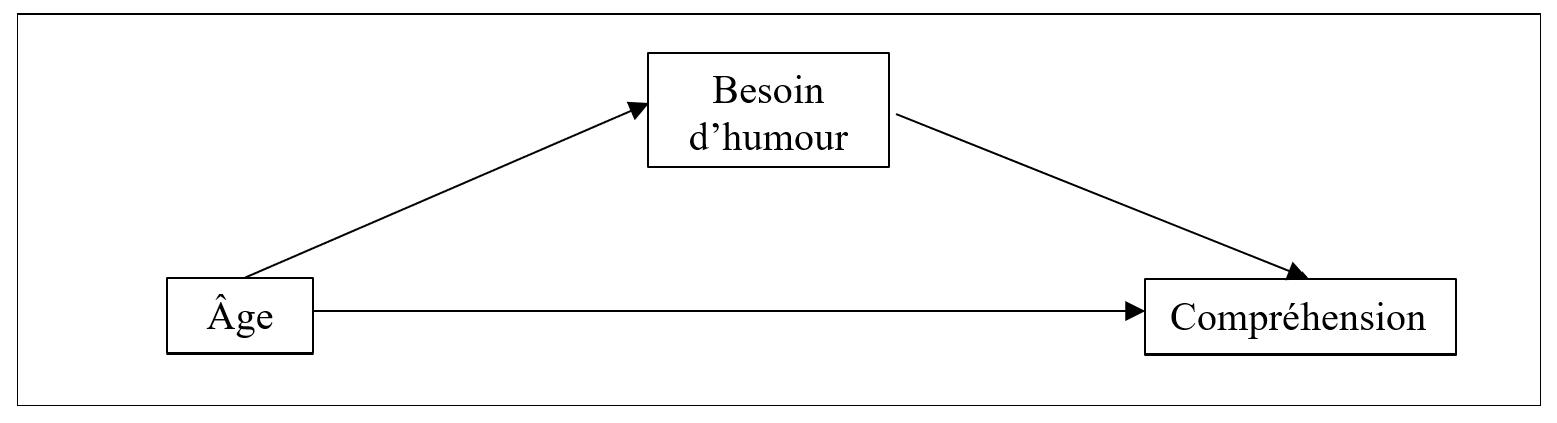
Does the understanding and appreciation of humorous material evolve with age according to children’s need for humor? To answer this question, we presented 222 elementary school students, aged 8–10 years on average, with humorous comic strips taken from children’s literature. Using this material, they were asked to perform two tasks: a task involving the production of inferences to measure their level of understanding of humour, and a task consisting of evaluating the humour contained in the comic strips. The children’s propensity to produce, but also to seek out, humour was measured using a tool adapted to this population of young students: the French version of the Need for Humor Scale (Picard & Blanc, 2013). Two main results can be reported: First, the need for humour seems to follow a developmental curve, at least in the age group considered, with a greater propensity to seek humour than to produce it. Secondly, and surprisingly, the need for humour does not appear to mediate the relationship between age, understanding, and appreciation of humour in children. These results deserve to be considered in order to further explore and consolidate the idea that humour could be a lever to be used in the school context for pedagogical purposes.
Metrics
References
Aillaud, M. et Piolat, A. (2013). Compréhension et appréciation de l’humour : approche cognitivo-émotionnelle. Psychologie française, 58(4), 255–275. http://doi.org/10.1016/j.psfr.2013.04.001
Banas, J. A., Dunbar, N., Rodriguez, D. et Liu, S.-J. (2011). A review of humor in educational settings: Four decades of research. Communication Education, 60(1), 115–144. https://doi.org/10.1080/03634523.2010.496867
Bariaud, F. (1983). La genèse de l’humour chez l’enfant. Presses universitaires de France.
Beyer, A. (2021). Introduction to statistics for psychology. https://open.maricopa.edu/psy230mm/
Blanc, N. (2010). Lecture et habiletés de compréhension chez l’enfant (2e éd.). Dunod.
Blanc, N. (2022). Emotion in storybooks: A key component to explore children’s comprehension processes. Dans M. Gadille (dir.), Proceedings of the 2nd SFERE-Provence/AMPIRIC conference on education, 30-31 March 2021, Marseille, France (p. 16–21). Sciendo. https://www.researchgate.net/publication/368353561
Blanc, N. (2024). La littérature de jeunesse pour sonder la compréhension de récits chez l’enfant âgé de 5 à 7-8 ans : réflexions méthodologiques. Les Cahiers Pratiques d’ANAE, (12), 55–61.
Blanc, N. et Brigaud, E. (2021). Humour et apprentissages scolaires : un duo prometteur ! Dans P. Gobin, V. Baltazart, A. Simöes-Perlant et N. Stefaniak (dir.), Émotions et apprentissages (p. 354–365). Dunod.
Blanc, N., Creissen, S. et Brigaud, E. (2018). Les dessins humoristiques pour appréhender les compétences inférentielles des enfants âgés de 6 à 10 ans : apports et perspectives. ANAE - Approche Neuropsychologique des Apprentissages chez l’Enfant, 30(155), 425–434.
Cao, Y., Hou, Y., Dong, Z. et Ji, L.-J. (2023). The impact of culture and social distance on humor appreciation, sharing, and production. Social Psychological and Personality Science, 14(2), 207–217. https://doi.org/10.1177/19485506211065938
Charles, F. (2016). Humour et implicite : lecture en classes de CP de l’album « Dis Papa, pourquoi les zèbres ne font-ils pas du patin à roulettes ? » Corela, Hors Série(20). https://doi.org/10.4000/corela.4661
Chik, M. P. Y., Leung, C. S. B. et Molloy, G. N. (2005). Development of a measure of humor appreciation. Australian Journal of Educational & Developmental Psychology, 5, 26–31.
Cline, T. W., Altsech, M. B. et Kellaris, J. J. (2003). When does humor enhance or inhibit ad responses? The moderating role of the need for humor. Journal of Advertising, 32(3), 31–45. https://doi.org/10.1080/00913367.2003.10639134
Cline, T. W. et Kellaris, J. J. (2007). The influence of humor strength and humor — message relatedness on ad memorability: A dual process model. Journal of Advertising, 36(1), 55–67. https://doi.org/10.2753/JOA0091-3367360104
Creissen, S. et Blanc, N. (2018). Le Petit Nicolas : une fenêtre ouverte sur la compréhension de l’humour chez l’enfant ? Dans N. Blanc (dir.), Le Petit Nicolas s’invite à l’école ! Quand psychologie rime avec pédagogie (p. 81–91). Presses universitaires de la Méditerranée. https://doi.org/10.4000/13ct5
Crawford, M. (2003). Gender and humor in social context. Journal of Pragmatics, 35(9), 1413–1430. https://doi.org/10.1016/S0378-2166(02)00183-2
Crawford, H. J. et Gregory, G. D. (2008). Scale validation issues in situations of minimal cultural difference. Dans R. Fletcher et D. Low (dir.), Proceedings of Australia New Zealand Marketing Educators Conference, 1-3 December, Sidney, Australia. Australia and New Zealand Marketing Academy Conference. https://researchoutput.csu.edu.au/ws/portalfiles/portal/10031105/Crawford%20_%20Gregory%20-%20Scale%20validation%20-%20S7%20S6%20P4%20.pdf
Delahaye, C. (2008). Des textes humoristiques à l’école primaire : intérêts et résistances. Enseigner le français, (8), 31–40. https://www.yumpu.com/fr/document/view/16713346/des-textes-humoristiques-a-lecole-primaire-interets-
Escallier, C. (2009). Pédagogie et humour : le rire comme moyen de construction d’un public attentif d’une salle de classe. Journal of Linguistic and Intercultural Education, 2(2), 105–114. http://hdl.handle.net/10400.13/1941
Gil, S. (2009). Comment étudier les émotions en laboratoire ? Revue électronique de Psychologie Sociale, (4), 15–24. https://psychologiescientifique.org/wp-content/uploads/2018/02/Gil-2009-Comment-%C3%A9tudier-les-%C3%A9motions-en-laboratoire.pdf
Guégan, Y. (2008). Les ruses éducatives : 100 stratégies pour mobiliser les élèves (3e éd.). ESF.
Hay, J. (2000). Functions of humor in the conversations of men and women. Journal of Pragmatics, 32(6), 709–742. https://doi.org/10.1016/S0378-2166(99)00069-7
Herzog, T. R., Harris, A. C., Kropscott, L. S. et Fuller, K. L. (2006). Joke cruelty and joke appreciation revisited. Humor, 19(2), 139–156. https://doi.org/10.1515/HUMOR.2006.007
Hoicka, E. et Akhtar, N. (2012). Early humor production. British Journal of Developmental Psychology, 30(4), 586–603. https://doi.org/10.1111/j.2044-835X.2011.02075.x
Hoicka, E., Jutsum, S. et Gattis, M. (2008). Humor, abstraction, and disbelief. Cognitive Science, 32(6), 985–1002. https://doi.org/10.1080/03640210801981841
Hoicka, E., Soy Telli, B., Prouten, E., Leckie, G., Browne, W. J., Mireault, G. et Fox, C. (2022). The Early Humor Survey (EHS): A reliable parent-report measure of humor development for 1- to 47- month-olds. Behavior Research Methods, 54, 1928–1953. https://doi.org/10.3758/s13428-021-01704-4
Horgan, D. (1981). Learning to tell jokes: A case study of metalinguistic abilities. Journal of Child Language, 8, 217–224. https://doi.org/10.1017/S0305000900003135
Humbeeck, B. et Berger, M. (2010). L’humour pour aider à grandir : essai psychologique sur l’importance du rire. Mols.
Jackson, M. L., Nuñez, R. M., Maraach, D., Wilhite, C. J. et Moschella, J. D. (2021). Teaching comprehension of double-meaning jokes to young children. Journal of Applied Behavior Analysis, 54(3), 1095–1110. https://doi.org/10.1002/jaba.838
Kuiper, N. A. et Martin, R. A. (1998). In sense of humor a positive personality characteristic? Dans W. Ruch (dir.), The sense of humor: Explorations of a personality characteristic (p. 159–178). Mouton de Gruyter.
Lang, P. J. (1980). Behavioral treatment and bio-behavioral assessment: Computer applications. Dans J. B. Sidowski, J. H. Johnson et T. A. Williams (dir.), Technology in mental health care delivery systems (p. 119–137). Ablex.
Lang, P. J., Bradley, M. M. et Cuthbert, B. N. (1997). International affective picture system (IAPS): Technical manual and affective ratings. NIMH Center for the Study of Emotion and Attention.
Lefort, B. (1992). Structure of verbal jokes and comprehension in young children. Humor, 5(12), 149–163. https://doi.org/10.1515/humr.1992.5.1-2.149
Loizou, E. (2004). Humorous bodies and humorous minds: Humor within the social context of an infant child care setting. European Early Childhood Education Research Journal, 12(1), 15–28. https://doi.org/10.1080/13502930485209281
Loizou, E. (2005). Infant humor: The theory of the absurd and the empowerment theory. International Journal of Early Years Education, 13(1), 43–53. https://doi.org/10.1080/09669760500048329
Loizou, E. (2006). Young children’s explanation of pictorial humor. Early Childhood Education Journal, 33(6), 425–431. https://doi.org/10.1007/s10643-005-0053-z
Loizou, E. et Kyriakou, M. (2016). Young children’s appreciation and production of verbal and visual humor. Humor, 29(1), 99–124. https://doi.org/10.1515/humor-2015-0131
Mallan, K. (1993). Laugh lines: Exploring humour in children’s literature. ERIC. https:///eric.ed.gov/?id=ED362905
Martin, R. A. (2003). Sense of humor. Dans S. J. Lopez et C. R. Snyder (dir.). Positive psychological assessment: A handbook of models and measures (p. 313–326). American Psychological Association.
Martin, R. A. (1998). Approaches to the sense of humor: A historical review. Dans W. Ruch (dir.), The sense of humor: Explorations of a personality characteristic (p. 15–60). Mouton de Gruyter.
McGhee, P. E. (1971a). Cognitive development and children’s comprehension of humor. Child Development, 42(1), 123–138. http://doi.org/10.2307/1127069
McGhee, P. E. (1971b). Development of the humor response: A review of the literature. Psychological Bulletin, 76(5), 328–348. http://doi.org/10.1037/h0031670
McGhee, P. E. (1974). Cognitive mastery and children’s humor. Psychological Bulletin, 81(10), 721–730. http://doi.org/10.1037/h0037015
McGhee, P. E. (1976). Children’s appreciation of humor: A test of the cognitive congruency principle. Child Development, 47(2), 420–426. http://doi.org/10.2307/1128797
McGhee, P. E. (1979). Humor: Its origin and development. Freeman.
Picard, D. et Blanc, N. (2013). Need for humor scale: Validation with French children. Psychological Reports, 112(2), 502–518. https://doi.org/10.2466/08.07.PR0.112.2.502-518
Pien, D. et Rothbart, M. K. (1976). Incongruity and resolution in children’s humor: A reexamination. Child Development, 47(4), 966–971. https://doi.org/10.2307/1128432
Purser, H. R. M., Van Herwegen, J. et Thomas, M. S. C. (2020). The development of children’s comprehension and appreciation of riddles. Journal of Experimental Child Psychology, 189, article 104709. https://doi.org/10.1016/j.jecp.2019.104709
Sanders, A. (2002). Un loup génial. École des loisirs.
Sempé, J.-J. et Goscinny, R. (2008). La rentrée du petit Nicolas. Gallimard Jeunesse. (Ouvrage original publié en 1973)
Suls, J. M. (1972). A two-stage model for the appreciation of jokes and cartoons: An information-processing analysis. Dans J. H. Goldstein et P. E. McGhee (dir.), The psychology of humour: Theoretical perspectives and empirical issues (p. 81–100). Academic Press. http://dx.doi.org/10.1016/B978-0-12-288950-9.50010-9
Tan, M. et Le Feyer, D. (2014). Mortelle Adèle : parents à vendre ! Bayard Jeunesse.
Tellis, G. J., MacInnis, D. J., Tirunillai, S. et Zhang, Y. (2019). What drives virality (sharing) of online digital content? The critical role of information, emotion, and brand prominence. Journal of Marketing, 83(4), 1–20. https://doi.org//10.1177/0022242919841034
Tessier, G. (1989). Lire un album humoristique, quelle histoire ! Spirale-Revue de recherches en éducation, (1), 117–133. https://doi.org/10.3406/spira.1989.1817
Tessier, G. (1990). L’humour à l’école : développer la créativité verbale chez l’enfant. Privat.
Thommen, E. et Suchet, C. (1999). Humour et intentionnalité chez l’enfant : incongruités des propriétés entre l’homme et l’animal. Archives de Psychologie, 67, 215–238. https://www.researchgate.net/publication/260357229
Downloads
Published
How to Cite
Issue
Section
License
Copyright (c) 2025 Canadian Society for the Study of Education

This work is licensed under a Creative Commons Attribution-NonCommercial-NoDerivatives 4.0 International License.
The Canadian Journal of Education follows Creative Commons Licencing CC BY-NC-ND.